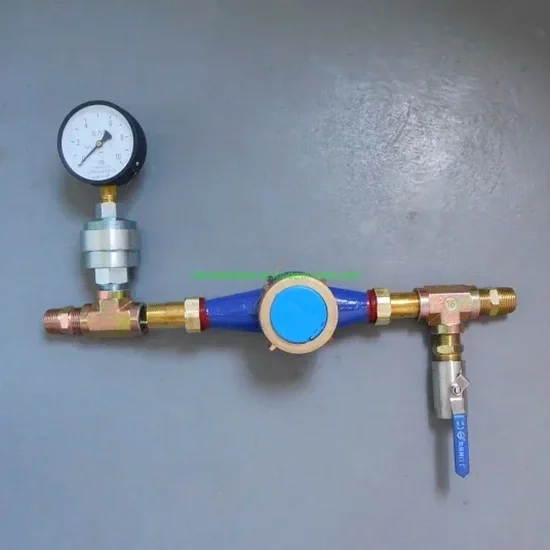
We see it all the time in San Jose projects—contractors run a few lab permeability tests on disturbed samples, plug the numbers into a dewatering plan, and then wonder why the excavation floods when they hit a gravel lens at 15 feet. Lab results on remolded specimens simply do not capture the mass hydraulic conductivity of the fluvial deposits that blanket much of the Santa Clara Valley. That disconnect costs money. A proper field permeability test, whether Lefranc in soil or Lugeon in fractured rock, measures how water actually moves through the formation at the scale that matters for construction. Our team runs these tests routinely from North San Jose redevelopment sites to the Coyote Creek corridor, and the data consistently tells a different story than lab estimates alone. When dewatering or recharge depends on accurate k-values, we integrate the CPT test for continuous soil profiling, and in hillside zones where bedrock controls flow we often pair the Lugeon test with slope stability analysis to capture the full hydrogeologic picture before a single pump is sized.
A Lefranc test in San Jose's alluvium will often return k-values 5 to 20 times higher than lab permeameter results on the same soil—that gap is the difference between a dry excavation and a flooded one.
Site-specific factors
The contrast between San Jose's western alluvial basin and the eastern foothills creates two entirely different risk profiles for the same test program. In the valley—think Berryessa or Alviso areas—the hazard is underestimating permeability in coarse channel deposits. A Lefranc test that misses a gravel stringer by two feet can produce k-values an order of magnitude too low, leading to undersized dewatering systems and surprise groundwater inflows during foundation excavation. Out east, near Evergreen or Silver Creek, the risk flips: Lugeon testing in weathered bedrock often captures high conductivity in the upper 20 feet of fractured material, but deeper, unweathered rock may be practically impermeable. Contractors who assume the shallow test applies to the full shaft depth can overdesign their groundwater control by a factor of three or more. The solution in both settings is the same—multiple test intervals, careful logging of recovery rates, and a field program that targets the specific stratigraphy rather than a one-test-fits-all approach. When rock mass quality is suspect, bringing in deep excavation monitoring during the construction phase closes the loop between predicted and actual groundwater behavior.
Relevant standards
ASCE 7-22 — Minimum Design Loads (groundwater provisions, Chapter 18), IBC 2024 — International Building Code (geotechnical investigation requirements), ISRM — Suggested Methods for Lugeon Test (International Society for Rock Mechanics), ASTM D1586 — Standard Test Method for SPT (borehole preparation for Lefranc testing), ASTM D2487 — Unified Soil Classification System (soil description during test intervals)
Common questions
What is the difference between a Lefranc test and a Lugeon test?
The Lefranc test measures hydraulic conductivity in soil or very soft rock using a borehole section as the test interval—water is introduced or allowed to fall, and the flow rate gives us k in cm/s. The Lugeon test is specific to fractured rock: a section of the borehole is isolated with packers, water is injected at stepped pressures, and the result is expressed in Lugeon units (Lu), which represent liters per minute per meter of test interval at 10 bar pressure. In San Jose, we use Lefranc in the valley alluvium and Lugeon in the Franciscan bedrock of the eastern foothills.
How much does a field permeability test cost in San Jose?
For a typical Lefranc or Lugeon test program in the San Jose area—including mobilization, drilling to set the test interval, the permeability test itself, and a report with k-values—project costs generally run between US$590 and US$1,080 per test interval. The final number depends on depth, access constraints, number of intervals, and whether rock coring is required for Lugeon setups. We carry out a fixed-price scope before any work begins.
When do I need a Lugeon test instead of a Lefranc test?
The decision comes down to the material you are testing. If the borehole is in soil, saprolite, or very soft weathered rock, the Lefranc method applies. Once you are into competent fractured bedrock—common in the Evergreen, Silver Creek, and Alum Rock areas of San Jose—the Lugeon test is the correct tool. It quantifies fracture conductivity specifically, which matters for tunnel inflow estimates, dam foundation assessments, and grouting design. If you are unsure, our geologist logs the cuttings or core first and we select the method based on what the ground actually shows.
How many test intervals do I need for a dewatering permit submittal?
This depends on your site stratigraphy and the reviewing agency, but for most San Jose projects involving excavations below the water table, we recommend a minimum of three to five test intervals distributed across the depth range that will be dewatered. A single test at the bottom of the excavation tells you almost nothing about perched water in the upper layers. Our standard approach targets each distinct hydrostratigraphic unit—gravel lenses, sand seams, weathered bedrock—so your groundwater model reflects the real layered system, not an averaged single value.
Can field permeability testing be done in the same borehole as SPT sampling?
Yes, and this is standard practice for us. We advance the borehole with SPT sampling to log stratigraphy and collect disturbed samples, then clean the hole to the target depth and run the Lefranc test in the same boring. For Lugeon testing, the borehole must be advanced by rotary drilling into bedrock and the test section isolated with packers, so it is typically a dedicated rock hole. Combining SPT logging and Lefranc testing in one mobilization saves time and reduces the drilling budget for valley-floor sites.