When designing foundations in California's seismically active zones, adherence to ASCE 7 and the California Building Code (CBC, based on the IBC) is not optional—it is the baseline for public safety. San Jose, situated at the southern end of the San Francisco Bay plain with coordinates near 37.3362° N, 121.8906° W, presents a complex subsurface profile dominated by Quaternary alluvial deposits and pockets of artificial fill from decades of agricultural and urban expansion. A Cone Penetration Test provides continuous, high-resolution soil data that is indispensable for characterizing these interbedded clays, silts, and sands. Unlike traditional drilling methods, the CPT captures subtle transitions in soil behavior type, allowing our team to model ground response with the precision that modern seismic codes demand. This data becomes particularly critical when evaluating the potential for cyclic softening in the shallow sand layers common beneath downtown San Jose, a factor that directly influences the selection of deep foundations for mid-rise structures.
A single CPT sounding in San Jose's alluvium replaces dozens of SPT samples, delivering a continuous profile that reveals thin liquefiable layers no standard drill rig can isolate.
Approach and scope
San Jose's transformation from the 'Valley of Heart's Delight' to the capital of Silicon Valley dramatically altered its geotechnical landscape. Orchards gave way to tech campuses, and the natural creek beds—like the Guadalupe River and Coyote Creek—were channelized, leaving behind a legacy of undocumented fills and variable alluvium. A CPT sounding in these conditions yields a near-continuous log of tip resistance (qc), sleeve friction (fs), and dynamic pore pressure (u2), which together allow for a nuanced interpretation of soil behavior type using normalized charts such as those by Robertson (1990). This is far more detailed than the discrete samples obtained from an SPT drilling program, especially when delineating thin liquefiable seams that could be missed by a split-spoon sampler every five feet. Our field procedures are calibrated to capture the subtle pore pressure dissipation trends that indicate whether a silty sand layer will drain or generate excess pressure during a seismic event, a distinction that can alter the required ground improvement strategy by an order of magnitude.
Common questions
What is the typical cost of a CPT sounding in San Jose?
For a standard CPTu sounding to depths of 40 to 60 feet in the San Jose area, the cost typically ranges from US$150 to US$260 per vertical foot, depending on site accessibility and the total linear footage of the program. This rate includes the cone rig with a 20-ton push capacity, a calibrated piezocone, real-time data acquisition, and a factual report with soil behavior type logs. Mobilization is a separate line item that varies based on distance from our dispatch point and any special traffic control requirements for work in downtown San Jose right-of-ways.
How does a CPT compare to an SPT boring for San Jose's soil conditions?
In the interbedded alluvial deposits of the Santa Clara Valley, a CPT provides a continuous 5 cm stratigraphic profile, whereas an SPT captures a sample only every 2.5 or 5 feet. This means a CPT can detect a 3-inch thick liquefiable silt seam that an SPT would almost certainly miss. The CPT also measures in-situ pore pressure, which is critical for identifying confined aquifer layers. However, the SPT retrieves a physical sample for visual classification and laboratory testing. For critical structures in San Jose, we often recommend a hybrid approach: several CPT soundings to map the stratigraphy continuously, anchored by one or two SPT borings to recover samples for index testing and to calibrate the CPT soil behavior type interpretation.
Can a CPT rig access tight urban lots in downtown San Jose?
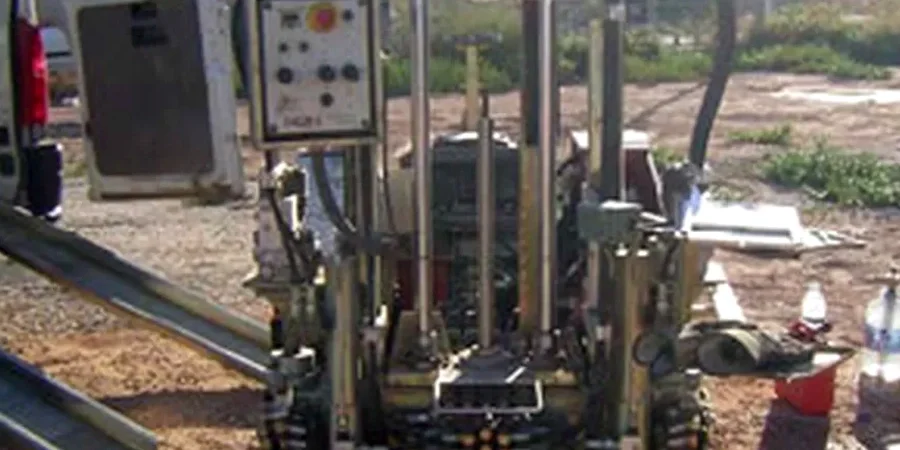
Yes, our primary CPT unit is a track-mounted, compact machine with a footprint that can navigate standard driveway gates and operate with as little as 18 feet of overhead clearance. For interior investigations inside existing industrial buildings in North San Jose, we also deploy a portable anchoring system that pushes the cone using the building's slab as a reaction mass. When site access is severely restricted—for example, in a basement retrofit or between closely spaced historical structures—we conduct a pre-mobilization site walk to verify clearances and plan the exact track path to avoid underground utilities.
What deliverables do you provide after the CPT field work?
Our standard deliverable package includes a factual data report with the corrected cone resistance (qt), sleeve friction (fs), friction ratio (Rf), pore pressure (u2), and normalized soil behavior type (SBTn) index per Robertson (2009), plotted at a legible vertical scale. For seismic projects, we add the shear wave velocity profile and the calculated Site Class. For liquefaction assessments, the report includes the factor of safety per depth, the LPI, and estimated post-liquefaction settlement. All data is provided in both PDF format and as digital files (Excel or gINT) compatible with common geotechnical analysis software.