← Home · Slopes & Walls

Active and Passive Anchor Design in San Jose

Together, we solve the challenges of tomorrow.

LEARN MORE →

San Jose's rapid transformation from an agricultural valley into the tech capital reshaped its underground profile. Each underground parking structure in the downtown core pushes deeper into the Santa Clara Valley's interbedded alluvium. We design anchor systems that hold back this unpredictable mix of clays, silts, and gravels. The water table sits high here, often just 10 to 15 feet below grade. A standard soldier pile wall without tiebacks is rarely enough. We size active tendons to prestress the ground before excavation moves forward. Passive anchors engage later, mobilizing resistance as the wall deflects. The choice depends on adjacent structures. In neighborhoods like Japantown or near the Diridon Station redevelopment, we often combine both types. A deep excavation monitoring plan verifies that loads match our design assumptions throughout the dig.

Anchor design in San Jose's alluvium means calculating tendon elongation against a soil mass that deforms differently in summer than in winter.
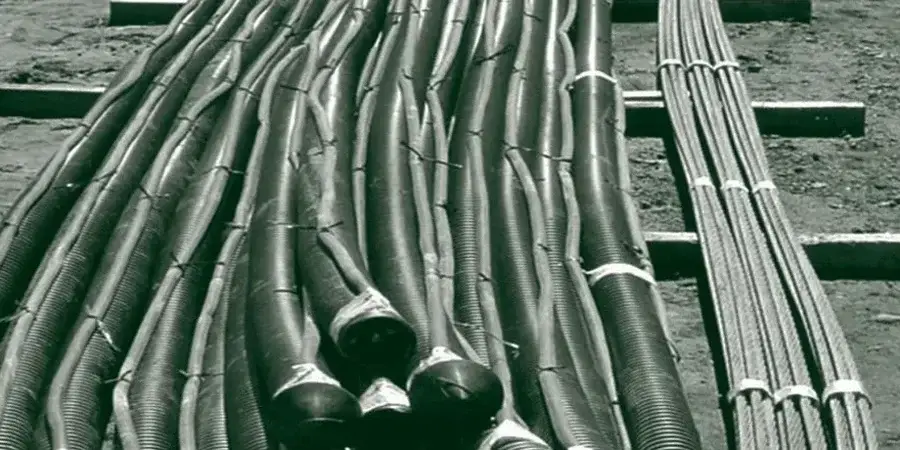
Approach and scope

San Jose sits at roughly 82 feet above sea level, but the subsurface drops through layers deposited by Coyote Creek and the Guadalupe River. These deposits create a challenging profile for anchor bond zones. We drill through loose sands and into the deeper Pleistocene gravels to develop capacity. A single high-strength bar anchor can handle 150 kips or more when bonded into competent material. We specify double corrosion protection for permanent anchors in the high groundwater environment. The alluvial clays dictate post-grouting techniques to fill fissures and increase the grout-to-ground bond. For temporary shoring along the BART extension, we design removable anchors that don't obstruct future underground easements. The target unbonded length ensures the stressing force transfers deep enough behind the active wedge. We verify capacity with CPT testing to map the stratigraphy before finalizing bond zone locations. Our team also runs triaxial tests on undisturbed samples to confirm the drained strength parameters used in the anchor design.
Active and Passive Anchor Design in San Jose
Technical reference image — San Jose

Site-specific factors

The northern reaches of San Jose overlie the Silver Creek Fault, a compressional feature that subjects the soil to sheared and tectonically disturbed zones. Ground conditions can shift from stiff clay to running sand across a single lot. An anchor installed without continuous grout takes on water and loses bond strength within months. The bigger risk is creep in the locked-off load. Relaxation of the tendon steel or consolidation of the grout body transfers load back into the wall. We log the lift-off test data on every anchor. If the residual load drops below 95% of the lock-off value, we re-stress before the next excavation lift. Liquefaction during a major event on the Hayward Fault also threatens passive anchors. Without adequate confinement, the bond zone fails. We specify a liquefaction assessment for any site with a groundwater depth shallower than 20 feet to confirm the anchor's post-seismic capacity.

Need a geotechnical assessment?

Reply within 24h.

Email: info@geotechnicalengineering1.com

Technical parameters

ParameterTypical value
Design methodologyLimit equilibrium (FHWA) and finite element for complex geometry
Anchor typeActive (prestressed) and passive (reaction) bar and strand systems
Bond zone verificationIn-situ grout-to-ground pullout tests per PTI DC-35
Corrosion protectionClass I (double barrier) for permanent; Class II for temporary
Proof testing133% of design load for temporary; 150% for permanent anchors
Load capacity60 to 200+ kips per anchor depending on soil profile
Key standardASCE 7-22, IBC 2021, PTI DC-35.1-14

Complementary services

01

Design of prestressed anchors

We calculate the active earth pressure envelope and determine the unbonded length, bond length, and tendon size to meet the required factor of safety.

02

Passive rock bolt design

For cuts in the Berryessa formation or hard Pleistocene gravels, we design fully grouted passive bolts that mobilize shear resistance along the bar.

03

Anchor load testing

We perform performance, proof, and lift-off tests on production anchors. All data is logged digitally and compared against the load-elongation curve.

04

Corrosion risk assessment

We test soil resistivity and pH in our lab to classify the site aggressiveness and specify the appropriate protection class per PTI guidelines.

Relevant standards

ASCE 7-22 Minimum Design Loads for Buildings and Other Structures, IBC 2021 International Building Code, PTI DC-35.1-14 Recommendations for Prestressed Rock and Soil Anchors, ASTM A416/A416M Low-Relaxation, Seven-Wire Steel Strand, ASTM F432 Standard Specification for Roof and Rock Bolts

Common questions

What is the difference between active and passive anchors in a San Jose excavation?

Active anchors are tensioned to a specified lock-off load before the next excavation lift. They minimize wall movement. Passive anchors are not prestressed; they engage only when the wall deflects and the ground begins to fail. We use active anchors next to sensitive structures like the SAP Center or light rail tracks. Passive anchors work well in competent soil where some deformation is acceptable.

How much does anchor design and testing cost for a project in San Jose?

Our engineering fees for anchor design and field testing typically range from US$920 to US$3,990. The scope includes the design calculations, bond zone determination, and proof testing of the production anchors. The final fee depends on the number of anchor rows and the project's proximity to fault zones.

Do you design removable anchors for temporary shoring in downtown San Jose?

Yes. We regularly design removable strand anchors for projects that must avoid encroaching on neighboring parcels. The tendon is extracted after the permanent structure is backfilled. We specify a sheathed bond length and a decoupling system that allows full strand recovery without leaving steel in the ground.

Location and service area

We serve projects in San Jose and surrounding areas.

View larger map