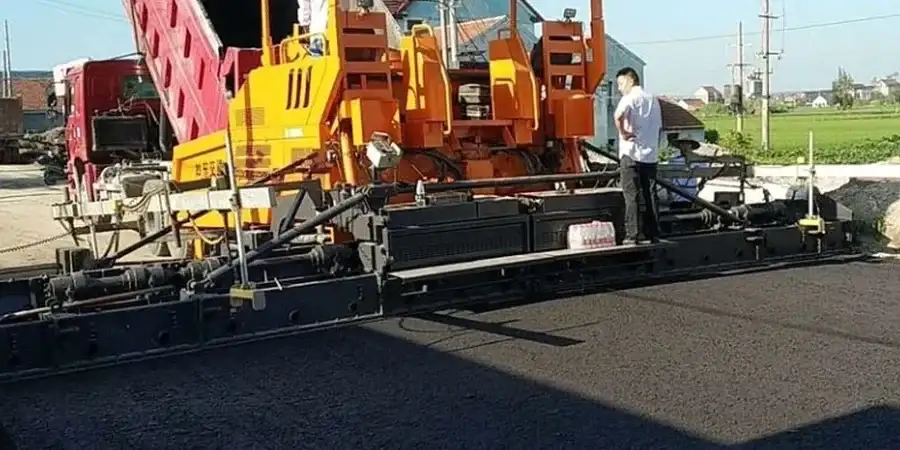
In San Jose, we see a recurring problem: pavements that crack within three years of placement, often due to underestimating the subgrade's expansive potential. The valley's alluvial clay—classified as CH under the Unified System—swells with winter rains and shrinks during our dry summers, creating differential movement that tears flexible layers apart. Our approach ties the structural number directly to a CBR value measured at field moisture, not the soaked condition alone. Since 2018, Caltrans District 4 has required performance-based mix designs for arterials like Capitol Expressway, and we bring that same rigor to private commercial lots, warehouse yards, and residential collector streets across Santa Clara County.
A flexible pavement fails from the bottom up. If the tensile strain at the asphalt base exceeds 70 microstrain, you've already designed a future fatigue crack network.
Relevant standards
AASHTO 1993 Guide for Design of Pavement Structures, AASHTO MEPDG (Mechanistic-Empirical Pavement Design Guide, 2008), ASTM D1586 (Standard Penetration Test, SPT) for subgrade investigation, ASTM D2487 (Unified Soil Classification, USCS), ASTM D4123 (Indirect Tensile Test for resilient modulus of asphalt), IBC 2021 (International Building Code, seismic and site class provisions)
Common questions
What AASHTO structural number (SN) is typical for a flexible pavement in San Jose?
For a collector street in San Jose with 2 million ESALs and a CH clay subgrade (Mr ~5,000 psi), we typically target an SN of 4.2 to 5.0. That translates to 4-5 inches of asphalt concrete over 8-10 inches of aggregate base, assuming no lime stabilization. When we stabilize the subgrade with 5% lime to a depth of 12 inches, the effective subgrade modulus increases to 15,000 psi, and the required SN drops to 3.8. The 1993 AASHTO equation is the starting point, but we always verify with MEPDG distress predictions for bottom-up fatigue cracking and total rutting.
How much does a flexible pavement design package cost for a commercial project in San Jose?
For a typical commercial lot or small arterial project in San Jose—say 20,000 to 80,000 square feet—our design package ranges from US$1,870 to US$4,610. The scope includes subgrade investigation with dynamic cone penetrometer (DCP) correlations, resilient modulus estimation from SPT blow counts, AASHTO 93 structural number calculation, MEPDG layer thickness optimization, and a stamped engineering report. Larger projects with FWD testing and laboratory resilient modulus triaxial tests fall at the higher end of the range.
What makes San Jose subgrade conditions different from other Bay Area cities for pavement design?
San Jose's subgrade is dominated by Holocene alluvial deposits from the Guadalupe and Coyote Creek watersheds, producing high-plasticity CH clays with a plasticity index frequently above 30. Unlike San Francisco's Franciscan bedrock or Oakland's Merritt Sand, our soils are highly moisture-sensitive. The groundwater table in North San Jose is also shallow—sometimes within 5 feet of the surface—creating capillary rise into the base course. That combination means drainage design and moisture conditioning of the subgrade are not optional add-ons; they're central to preventing premature rutting and heave.