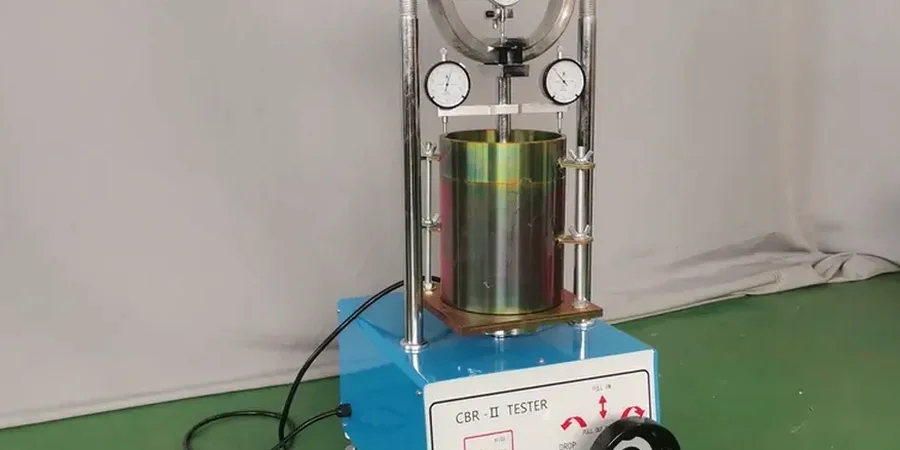
San Jose’s expansion from a farming hub into the capital of Silicon Valley placed immense demand on its transportation infrastructure. As orchards gave way to subdivisions and tech campuses, the underlying alluvial soils of the Santa Clara Valley had to support increasingly heavy pavement sections. The laboratory CBR test became the standard method for verifying subgrade strength before placing asphalt or concrete, directly influencing the thickness design of flexible and rigid pavements across the city. Today, with San Jose’s population exceeding one million and major arterials like Capitol Expressway and Highway 87 carrying daily traffic loads far beyond original projections, accurate soaked CBR values are non-negotiable.
Our team interprets these results through the lens of local geology, where silty clays and sandy loams derived from the Diablo Range foothills require careful moisture conditioning. For projects near Coyote Creek, where groundwater can fluctuate seasonally, pairing the lab CBR with a grain size analysis helps identify fines migration risks before the pavement structure is finalized.
A soaked CBR of 3% versus 6% can mean the difference between 8 inches of aggregate base and 14 inches—a cost driver that multiplies across every linear foot of roadway in San Jose.
Approach and scope
A recurring mistake in San Jose is designing pavement based solely on field density tests without correlating them to laboratory-measured bearing capacity. Contractors sometimes compact the subgrade to specification, achieve the target relative compaction, and assume the CBR is adequate—only to see premature rutting after two wet winters. The lab CBR test eliminates this guesswork by measuring the load-penetration response of a specimen compacted at optimum moisture content and then soaked for 96 hours to simulate worst-case field conditions. This soaked value is what the IBC and Caltrans design procedures actually require.
Our laboratory in San Jose runs both unsoaked and soaked CBR on remolded samples prepared to project-specific density and moisture targets. When pavement designs involve stabilized layers, we recommend complementing the CBR with
flexible pavement analysis that integrates the subgrade modulus with traffic loading forecasts. For rigid pavements on expansive clays common in East San Jose, the soaked CBR informs the required base course thickness, while
rigid pavement design parameters address curling stresses and joint spacing separately.
Site-specific factors
Much of downtown San Jose and the North First Street corridor sits on Quaternary alluvial fan deposits—interbedded clays, silts, and sands with lenses of high compressibility. The USGS seismic hazard maps place the city within a high shaking intensity zone, with the Hayward Fault less than ten miles to the east and the San Andreas Fault fifteen miles to the west. Pavement distress in this environment often stems not from traffic overload but from differential subgrade settlement triggered by groundwater shifts and seismic compaction. A pavement section designed around an overestimated CBR value will fail at the subgrade level, and the repair cost far exceeds the initial testing investment. The laboratory CBR test, conducted under controlled moisture and density conditions, provides the repeatable benchmark that field correlations cannot substitute. When site conditions suggest potential liquefaction in saturated sandy layers beneath the alignment, the design team should also evaluate the liquefaction risk, because post-liquefaction settlement can render even a well-designed pavement unusable within hours of a major event.
Common questions
What does a laboratory CBR test cost in San Jose?
A standard three-point soaked CBR test according to ASTM D1883 typically ranges from US$140 to US$200 per specimen, depending on the number of specimens in the program and whether moisture-density relationship testing is bundled. Projects requiring multiple CBR points for different subgrade materials benefit from volume-based pricing.
Why is the soaking period 96 hours?
The four-day soaking period, specified in ASTM D1883, simulates the long-term saturated condition a subgrade might expertise after successive wet seasons. In San Jose, where the water table can rise significantly during El Niño winters, the soaked CBR is the conservative value required for pavement thickness design per IBC and Caltrans guidelines.
Can I use the field CBR instead of the lab test?
Field CBR tests on undisturbed samples carry out useful screening data, but the laboratory CBR test is the definitive method for pavement design because it controls compaction energy, moisture content, and soaking conditions. Most agencies in the Bay Area require laboratory CBR values for structural pavement design submittals, with field tests used only for quality control during construction.
How long does it take to get results?
The standard turnaround is seven to ten working days from sample receipt, accounting for specimen preparation, compaction, the 96-hour soaking period, and load testing. Expedited reporting can be arranged for projects with tight bid schedules, though the soaking time itself cannot be shortened per the ASTM standard.
What soil types in San Jose typically produce low CBR values?
The lean clays and fat clays found in the Santa Clara Valley floor, particularly in areas near the Guadalupe River and Coyote Creek floodplains, often yield soaked CBR values between 2% and 5%. These low values require thicker aggregate base courses or subgrade stabilization. Coarser alluvial soils near the Los Gatos Creek outwash and the Diablo Range foothills generally produce CBR values above 10%.