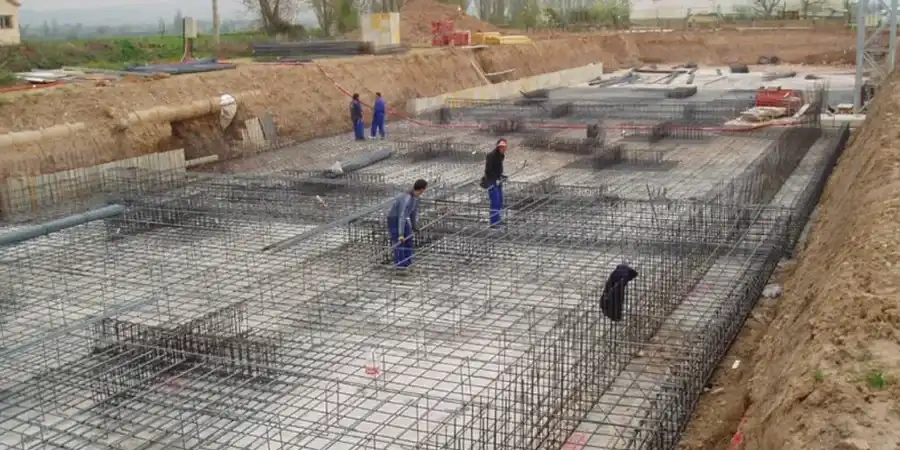
Overdesigning footings is a silent budget killer in San Jose construction. We see it regularly: engineers default to conservative assumptions because they lack site-specific data, and the owner pays for concrete and steel that were never necessary. The valley floor beneath San Jose tells a different story block by block—some sites sit on stiff alluvial gravels from the Coyote Creek fan, others on compressible Bay Mud lenses that demand careful settlement analysis. A defensible shallow foundation design starts with accurate characterization of these deposits, not generic presumptive values. Our approach ties field investigation directly to bearing capacity calculations and total settlement estimates, so your structural team can optimize dimensions without gambling on performance. For projects near the Silver Creek fault or in liquefaction-prone zones mapped by the USGS, we integrate seismic demand parameters from ASCE 7 into the foundation load path early in the design phase.
Site-specific bearing capacity analysis in the Santa Clara Valley often reduces footing dimensions by 15–25 percent compared to presumptive code values, without compromising safety.
Site-specific factors
The drill rig working a San Jose infill lot is a compact track-mounted unit—often a Diedrich D50 or CME-55—navigating a 35-foot setback while the crew logs samples at five-foot intervals through fill, alluvium, and sometimes into the underlying Franciscan bedrock. The risk we are mitigating with every foot of penetration is differential settlement that manifests two years after occupancy as drywall cracks and sticking doors. In San Jose, where the water table can fluctuate seasonally from 8 to 15 feet below grade, a shallow foundation placed in moisture-sensitive clay may expertise cyclic heave and shrinkage that a simple bearing check would never flag. Worse still, a footing bearing on undocumented fill containing organic debris will undergo long-term decomposition settlement that no amount of reinforcement can arrest. Our deliverable includes a clear bearing stratum recommendation, compaction verification requirements, and—when necessary—a subgrade treatment specification that keeps your foundation performing within serviceability limits for the life of the structure.
Common questions
What does a shallow foundation design package cost in the San Jose area?
For a typical single-family residential or light commercial project in San Jose, a complete shallow foundation design package—including site investigation, bearing capacity analysis, settlement calculations, and a stamped report—ranges from US$1,740 to US$2,950. The final fee depends on the number of borings required, lab testing scope, and whether seismic liquefaction assessment is needed. We carry out a fixed-price proposal after reviewing your site address and structural loads, so there are no surprises.
How deep do footings need to be in San Jose?
The California Building Code requires a minimum 12-inch embedment below undisturbed ground surface. In practice, many San Jose sites need deeper placement—typically 18 to 24 inches—to get below the active zone of seasonal moisture fluctuation in expansive near-surface clay, or to penetrate fill layers and reach competent alluvium. We determine the exact bearing stratum depth based on boring logs and consistency testing.
Can you design a shallow foundation on a site with high liquefaction potential?
Yes, but it requires careful evaluation. If the liquefiable layer is thin and confined at depth, we may be able to place the footing above it and demonstrate acceptable settlement under seismic loading using empirical methods from Seed & Idriss. When liquefaction-induced settlement exceeds ¾ inch, we typically recommend ground improvement—such as vibrocompaction or stone columns—before placing the footing, or we transition the foundation design to a mat or pile system that bridges the problematic zone.